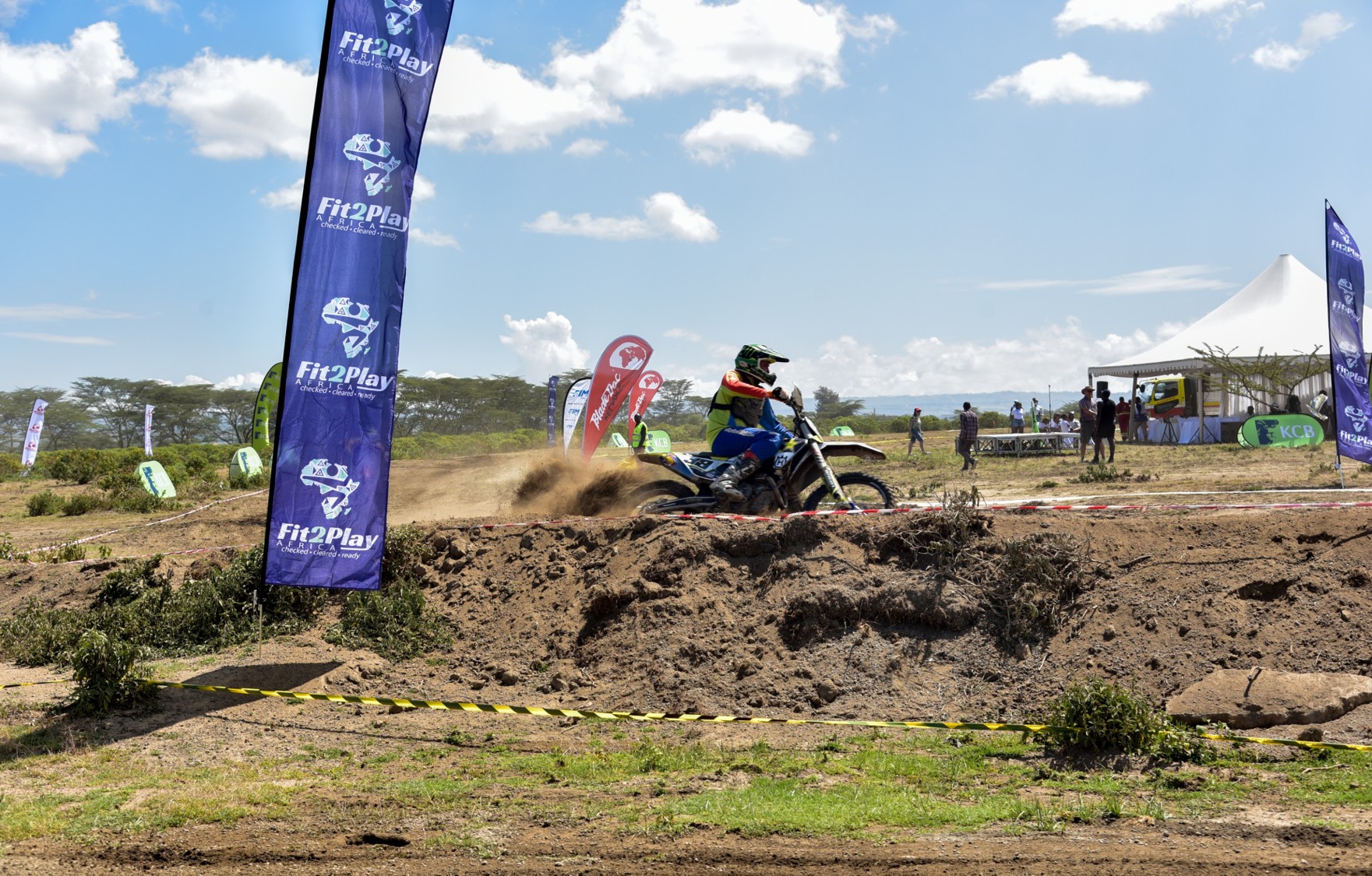
The engines screamed. The dust rose over Naivasha. And Kenya reminded the rest of Africa exactly who runs the show when it comes to hosting world-class motorsport.
The 2025 FIM Africa Central Africa Motocross Challenge wasn’t just another round on the regional calendar. It was a landmark — a championship that blended elite on-track warfare with medical innovation, road safety advocacy, and a vision for what African motorcycle sport can look like when it grows up. What unfolded at the Matteos MX Track over those two days in December was, by any measure, the most complete CAC event in the series’ two-decade-plus history.
Here is the full story.
The Stage: Naivasha, Kenya
The Matteos MX Track in Naivasha was the arena. Sanctioned by FIM Africa and organized by the Blade Doc Network under the umbrella of the Motorcycle Sports Federation of Kenya (MSFK), the 2025 CAC drew competitors from five nations: Kenya, Uganda, Tanzania, Rwanda, and the Democratic Republic of Congo.

Five flags. One track. Maximum intensity.
The championship categories on offer were the most expansive the series had ever run — Pewee, 50cc, 65cc, MX Lites, MX1, MX2, WMX, Veterans, and Masters. From the tiniest Pewee machines navigating the circuit for the first time to seasoned MX1 heavyweights throwing everything they had at each other through the berms, every class told a different story of skill, grit, and regional pride.
With a legacy spanning more than two decades, the Central Africa Motocross Challenge is regarded as one of the continent’s most fiercely contested championships. Kenya’s hosting of the 2025 edition wasn’t just logistically impressive — it sent a clear message that the country’s capacity to stage international-standard motorsport events is no longer a promise. It’s a proven fact.
The Racing: Regional Supremacy on the Line
Five nations, nine categories, and a paddock buzzing with the kind of energy that only comes when athletes have been waiting all year for this moment. Riders who had trained through long off-seasons, tuned their machines, and studied the competition now had one weekend to make it count.
Kenya raced with home crowd fire behind every corner. Uganda arrived with the weight of a dominant regional legacy and the ambition to add to it. Tanzania, Rwanda, and the DRC brought the kind of hunger that underdog nations carry when they know they’re on a bigger stage than anything they’ve competed on before.
The WMX category — women’s motocross — was on the card, a detail that matters. Women competing at a regional FIM-sanctioned championship is not a footnote; it is a marker of how far the sport has developed in this part of the world, and a signal to the next generation of female riders that the gate is open for them too.
The depth of talent across all nine categories was, according to observers, the clearest evidence yet that the CAC’s development mandate — built into the series’ DNA since its founding — is genuinely working. Nations that once sent small, outgunned teams are now showing up with competitive rosters and race strategies. That doesn’t happen by accident. It happens because this championship has been forcing federations to invest, improve, and develop for over twenty years.
The Medical Milestone: Africa Makes History
The racing was the headline act. But what happened off the track in Naivasha may have been the most consequential development in the CAC’s entire history.
For the first time in Africa, the FIM International Medical Mentorship Programme was embedded directly into a regional championship. Chief Medical Officers and trackside medical teams from six African countries gathered for an advanced seminar on global emergency response standards in motorcycle sport — right there, on the ground, during a live international event.
Think about what that model represents. Rather than sending individual medics to distant training centres, the FIM Africa Medical Commission brought the world-class standard directly to the continent and wove it into the fabric of a championship weekend. Medical professionals weren’t just attending a workshop — they were operating in the environment they’re trained for, applying concepts in real time, and building cross-border professional networks that will last long after the weekend ended.
This is how you build sustainable infrastructure in sport. Not with one-off programmes, but with repeatable, scalable models that embed expertise into the ecosystem.
The Road Safety Dimension: 200 Graduates on the Ground
Kenya didn’t stop at elite sport and medical excellence. The 2025 CAC was also a platform for one of the most practical road safety interventions the region has seen at a motorsport event.
The Blade Doc Network’s Rising Stars Africa Road Safety Campaign deployed over 200 programme graduates — young people trained in road safety and first aid — as race marshals across the Matteos MX Track. These weren’t ceremonial roles. These were trained individuals applying real skills in a high-speed, high-stakes sporting environment, demonstrating that community-based safety training can be converted directly into operational value at major events.
It was an elegant proof of concept: train communities, then activate them. And it worked.
Dr. David Karuri, Founder and CEO of the Blade Doc Network, framed it directly: “This year’s CAC was about more than competition. Kenya provided a platform that brought together elite sport, athlete welfare, anti-doping education and meaningful road safety impact.”
That’s a different kind of ambition. Most championship organisers aim to put on a good race. Kenya aimed to put on a good race, run a world-first medical training programme, advance road safety advocacy, and embed anti-doping education — all in the same weekend. And they delivered on all of it.
What This All Means for African Motorsport
Step back from the individual pieces and the picture is clear. The 2025 FIM Africa Central Africa Motocross Challenge represented a genuine leap forward — not just in the quality of racing, but in the vision of what a regional championship can achieve.
Kenya didn’t just host a motocross event. It demonstrated a model: elite competition as a vehicle for medical development, safety advocacy, community empowerment, and continental institution-building. FIM Africa noticed. The riders noticed. The five nations who sent their best to Naivasha noticed.
The CAC has always been a development engine. What 2025 showed is that engine is now running at a level the founding generation could only have dreamed of when they first pushed for the series to be recognised over twenty years ago.
The dirt is ready. The nations are hungry. And if 2025 is the new benchmark, the next edition of the CAC has a very high bar to clear.
See you at the gate.